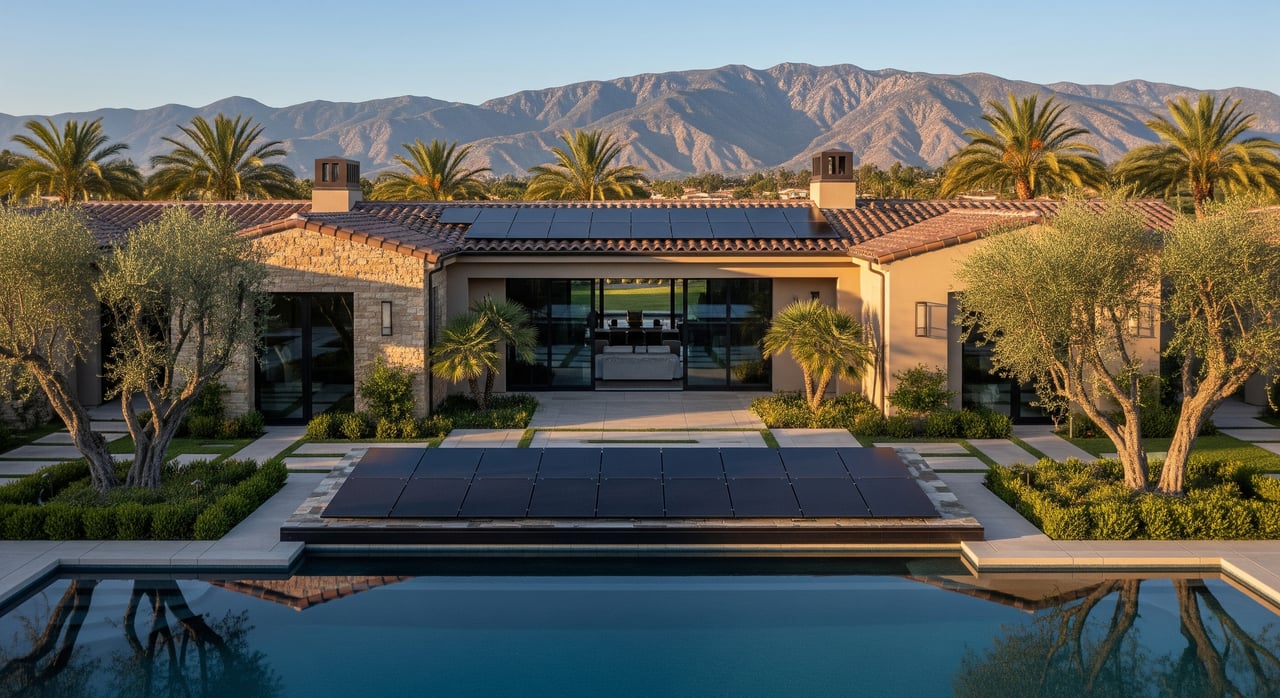
Thinking about selling a Menifee home with solar? You are not alone. Many Inland Empire owners want to capture the value of lower electric bills without scaring off buyers. The key is to price what the market actually values and to back it up with simple, clear proof. In this guide, you will learn how ownership type, SCE’s Net Billing Tariff, and system age shape price, plus the documents and steps that make your number stick. Let’s dive in.
What really drives price in Menifee
Solar can help your home stand out in sunny Menifee, but value depends on how the system is owned and how it performs. Owned systems are usually seen as an asset because they reduce future bills and are easier to reflect in appraisals. Leased or PPA systems add a payment and transfer complexity, which can limit the buyer pool and the premium you can claim.
Studies have found that owned residential solar often correlates with higher sale prices, though results vary by market, system size, and electricity rates. Leased systems show mixed or negative impacts and can increase time on market. The bottom line is that buyers pay for verified savings and simplicity. If you can document real bill reductions and clean ownership, you will be in a stronger negotiating position.
Owned vs leased solar: pricing moves
If the system is owned
- Present the system as a cost-saving feature, not just equipment. Share annual production, average bill reduction, and remaining warranties.
- Support a modest price lift with local comps that have solar, plus your documented savings under current SCE rules. Avoid aggressive claims.
- If the system is older, be transparent about likely inverter replacement timing and costs, and plan for a small allowance if needed.
If the system is leased or under a PPA
- Disclose the full contract early, including monthly cost, remaining term, transfer steps, and any buyout amount.
- Expect some buyers to push for a price reduction or seller concession to offset the payment or transfer friction.
- Consider a pre-listing buyout if the math pencils out. Compare the buyout cost to the likely price lift and faster buyer acceptance you may gain by converting to owned.
SCE Net Billing Tariff: what buyers think
SCE customers are subject to a Net Billing Tariff rather than the old full retail net metering for newer interconnections. Under this structure, exported solar power is credited at a rate that reflects the utility’s avoided cost at the time of export, not the full retail rate. That means orientation, time-of-use behavior, and battery pairing matter more, and some systems will show lower credits than before.
What changed and why it matters
- Exported energy earns time-based credits that may be lower than retail rates. Large exports at low-value times earn less.
- Buyers focus on realized savings on recent bills. A big system does not guarantee big credits under the new tariff.
- Batteries can help by shifting solar to higher-value evening hours, but they also add complexity. Buyers will ask about battery age and warranty.
What to show in your listing
- 12 to 36 months of SCE bills showing kWh consumed, kWh exported, and dollar credits. Include periods before and after any tariff changes if available.
- Monitoring data from the inverter or app that shows production and exports month by month.
- A simple one-page summary of average monthly bill before solar, after solar under the current tariff, and net savings.
System age and components: real impact
Solar value is not just about size. Buyers want to understand what they are getting today and what they may need to replace tomorrow.
Panels, inverters, and batteries
- Panels typically carry 25 to 30 year production warranties, with gradual output degradation each year.
- String inverters often have a 10 to 15 year lifespan. Microinverters can extend to 15 to 25 years. Mid-life replacement is common and should be budgeted.
- Batteries usually last 8 to 15 years depending on use and chemistry. Warranty and state of health data are key.
Performance and remaining life
- Annual production compared to the home’s usage matters more than nameplate size. Higher self-consumption usually means better savings.
- Provide 1 to 3 years of production history to show seasonal trends and consistency.
- If the system is approaching inverter end of life, consider pricing in a small allowance or provide a current replacement quote to keep negotiations smooth.
Appraisal, lending, and disclosures
Appraisal methods that work
- Sales comparison approach. Use nearby comps with similar solar ownership and age, then adjust for differences.
- Cost approach. Estimate replacement cost minus depreciation, especially for newer systems.
- Income approach. Show defensible annual bill savings under today’s tariff and convert that to value. Use real bills and production, not only estimates.
Lender and financing tips
- Owned systems are usually easier for underwriting. Leases and PPAs require review of contracts and transfer steps, which can slow approvals.
- FHA, VA, and conventional programs allow solar, but documentation varies. Get your lender looped in early if there is a lease.
- If the system is financed, clarify whether there is a lien and whether it must be paid off at closing.
Documents to gather early
- Proof of ownership or the full lease or PPA contract.
- Permits and final inspection approvals.
- SCE interconnection approval and tariff enrollment documents.
- Inverter and module make, model, serial numbers, and warranties.
- 12 to 36 months of production logs and SCE bills.
- Maintenance records, battery documentation, and any HOA or roof reports.
- If leased or financed: balance, payment schedule, transfer instructions, and any required consent forms.
Pricing worksheet for Menifee sellers
Use this simple framework to set and support your list price:
- Confirm ownership. Owned, financed, or leased. If leased, note payment, term, transfer conditions, and buyout quote.
- Summarize performance. System size in kW, average annual production in kWh, and typical monthly bill reduction under the current tariff.
- Estimate near-term costs. Inverter age and expected replacement window, battery age if present, and any roof or maintenance items.
- Value the savings. Use actual annual savings from SCE bills and monitoring data to support a modest premium for owned systems.
- Reconcile with comps. Find at least one or two local sales with solar ownership you can cite. If comps are thin, pair cost and income approaches.
- Set the strategy. For leased systems, decide on list-price reduction, concession, or buyout before listing. For older systems, decide on an allowance.
- Package the proof. Create a one-page solar summary, include bills and production as attachments, and note key warranties.
Buyer checklist for solar homes
- Verify ownership status and get all documents listed above.
- Review SCE bills and production to compute actual savings under the current tariff.
- Ask about inverter and battery age, warranties, and expected replacement costs.
- If a lease or PPA exists, review transfer steps, remaining term, and lender acceptability before you open escrow.
Local notes for Menifee
- Menifee is within SCE territory and benefits from high sunshine, which supports solar production. Buyers here tend to value clear monthly bill savings.
- Make sure your permits and final approvals are in the city or county file. Having a clean paper trail builds confidence with appraisers and lenders.
- Highlight time-of-use friendly features if you have them, like battery storage or load shifting, since they can improve savings under the current tariff.
Ready to price it right?
If you are planning to sell in Menifee, the smartest move is to present your solar like a documented asset. A clear ownership story, real SCE bills, and a short list of warranties and expected replacements will help you ask for a fair premium and defend it. If you are buying, the same documents protect you from surprises and help you compare homes on equal terms.
Want a pricing strategy that aligns with your goals and timeline? Connect with Craig Flint for a free, data-backed valuation and set-fee listing plan tailored to your Menifee home.
FAQs
Does an owned solar system always raise sale price in Menifee?
- Not always. Owned systems can support a premium when you show real bill savings, solid documentation, and reasonable remaining life, but results vary by system and comps.
How should I price a leased or PPA solar system when selling?
- Be transparent, share the contract, and consider a list-price reduction or concession to reflect the payment and transfer steps, or evaluate a buyout before listing.
How does SCE’s Net Billing Tariff affect what my panels are worth?
- It credits exports at time-based avoided-cost rates, not full retail, so buyers focus on recent bills and realized savings, not just system size.
What documents do appraisers and lenders want to see for solar?
- Proof of ownership or lease, permits and interconnection, 12 to 36 months of SCE bills and production, equipment details, warranties, and any transfer instructions.
Should I offer an allowance for an older inverter or battery?
- Yes, if the system is near typical replacement age. A modest allowance or current installer quote can reduce friction and help keep your price intact.